What does a smart contract do?

Course · Web3 · 4 min
What?01 / 08
The smart contract
A public program receives an instruction, checks its rules and executes the result.
Eight scenes to understand what code automates — and what it can never guarantee.
Scroll

What?02 / 08
An automaton on-chain
A smart contract is a program recorded on a blockchain.
It holds state, receives calls and applies the same rules to every user.
It is neither intelligent nor inherently a legal contract: it simply executes its code.

What?03 / 08
An address and rules
Once deployed, the program has an address that wallets and applications can call.
Its code defines available functions, conditions and who retains privileges.
Some contracts are immutable; others can be upgraded by an administrator key.

Why?04 / 08
Why automate it
Execution depends on neither opening hours nor an operator's goodwill.
Several applications can compose with the same public program.
Verifiable rules and movements reduce part of the need for trust.

Why?05 / 08
What code cannot know
The contract only knows on-chain data or information delivered by an oracle.
False data creates a false result even when the program works perfectly.
A flaw, hidden privilege or bad assumption can make automation dangerous.

How?06 / 08
How an action executes
From click to result, four steps:
Read — the interface prepares the call
Sign — the wallet presents and authorises the action
Execute — nodes compute the same result
Finalise — the new state joins the blockchain

How?07 / 08
Useful checks
Verify the official address and network.
Identify administrator rights and upgradeability.
Look for audits, past incidents and clearly documented limits.
Test with a small amount before granting a meaningful approval.
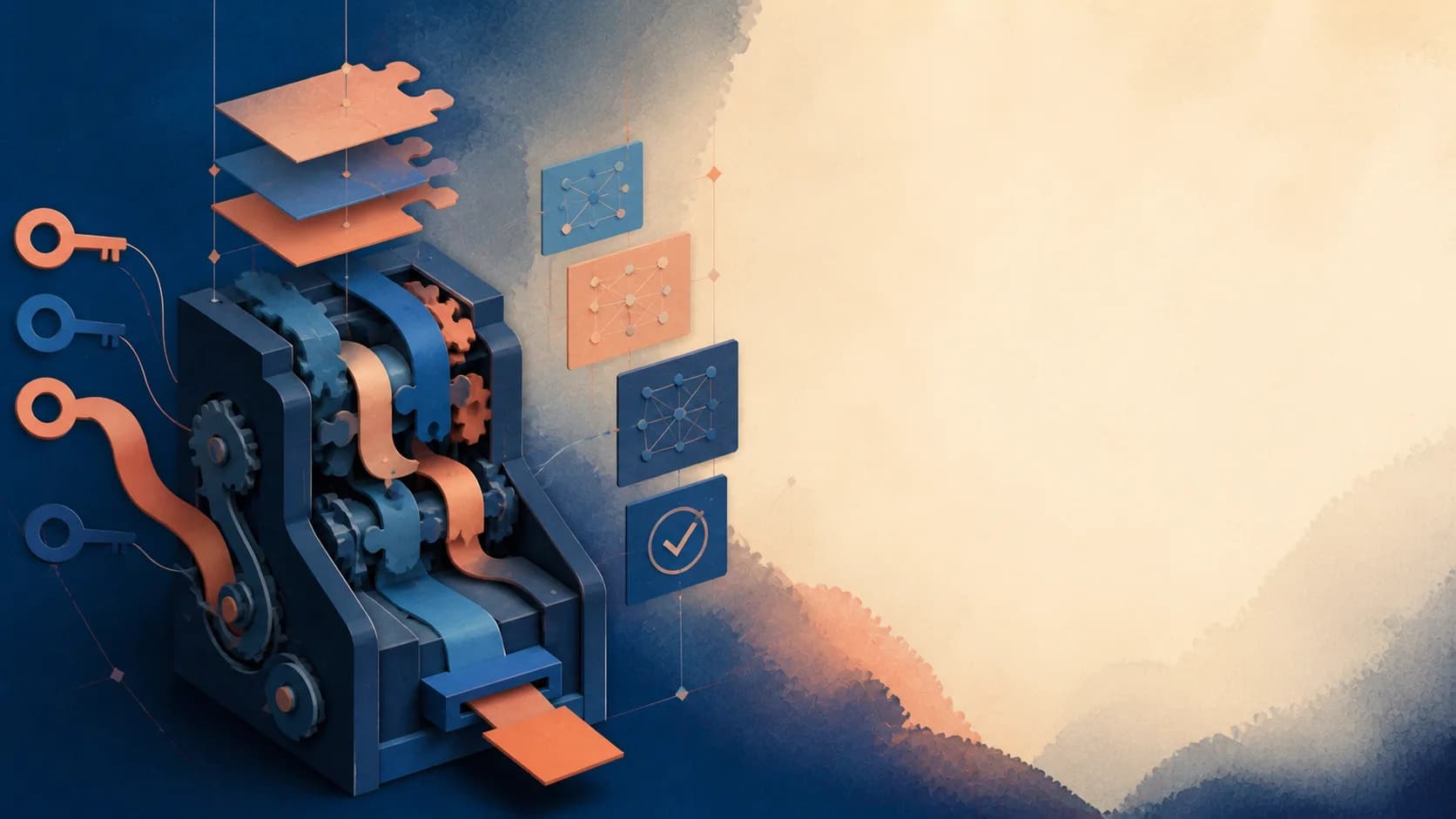
How?08 / 08
Code, not a promise
A smart contract makes execution predictable, not necessarily fair or safe.
Its value comes from understandable rules, reliable data and controlled privileges.
You can now look behind the button and see the program at work.