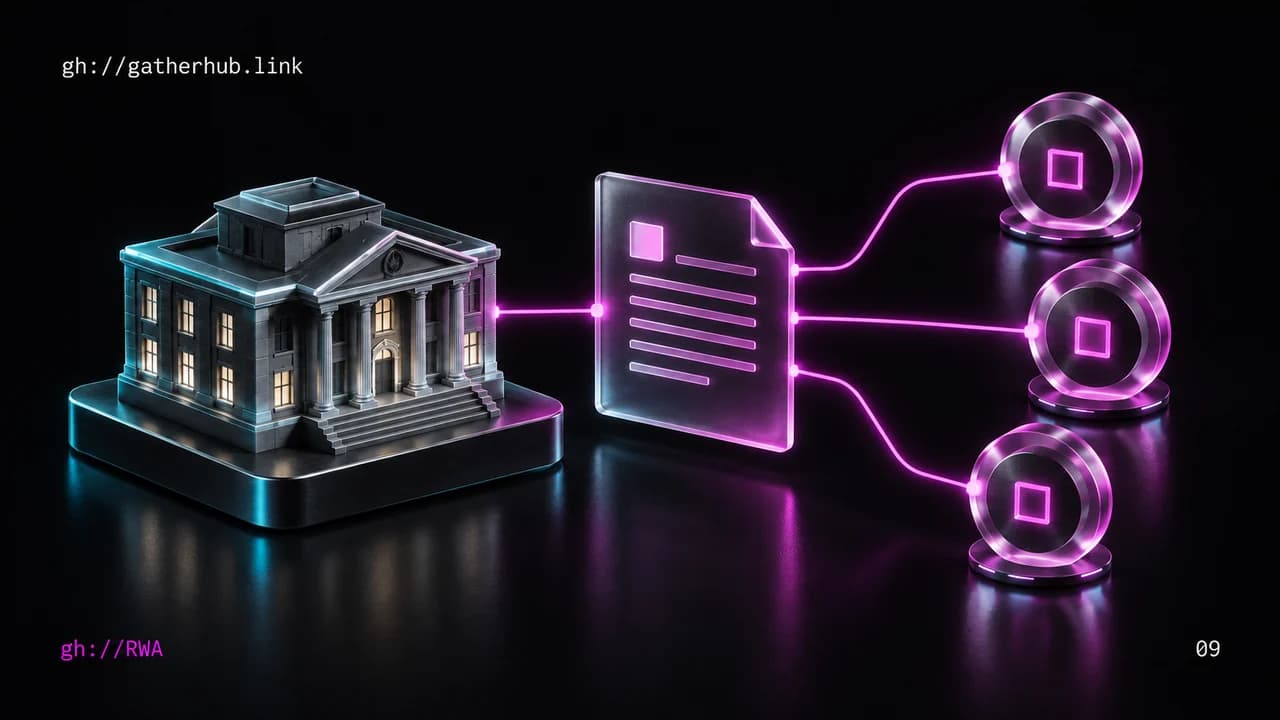
Can a token represent a building, gold or a bond? Yes, but the asset does not turn into a file. Tokenisation organises a digital representation and the rules connecting it to an asset or a right.
RWA stands for Real-World Assets. In Web3 discussions, it covers physical goods and traditional financial assets. The Web3 foundations and smart contract guide prepare you for this second learning path.
Examine three separate layers
Consider a fictional warehouse holding goods and a token promising a collection right.
The first layer is the asset: which goods, in what condition and where? The second is the right: who can claim what, from whom and under which conditions? The third is the token: how does the system represent and transfer that right?
The ledger may show a token transfer without proving that the goods remain available. This distinction helps explain the BIS discussion of tokenisation, which connects representation, rules and governance.
Representing a right or issuing it directly
Some projects represent assets already recorded elsewhere. Others issue instruments directly within digital infrastructure recognised for that purpose. The ledger’s legal role therefore varies.
Our warehouse documents might give each token a specific collection right. Alternatively, they might provide only a claim against the operator. These are different promises even if the wallet displays identical artwork.
The UNIDROIT digital asset principles distinguish control of a digital asset from the legal effects of its link with another asset. They provide a framework; concrete rights depend on applicable laws and documents.
What tokenisation can make easier
A well-designed system can share a common record and automate some operations. It can also divide an issuance into smaller units where rights and access rules allow this.
Imagine ten participants consulting one register of collection rights. A shared process might replace ten manual reconciliations. But if the warehouse maintains a contradictory register, new technology does not resolve the disagreement by itself.
Measure the benefit against a specific task: fewer errors, simpler processing or better traceability. The number of tokens created is not itself a useful outcome.
What remains in the real world
Buildings need maintenance, borrowers may default and goods may deteriorate. A token does not remove these realities. The Financial Stability Board report on tokenisation identifies liquidity risks and operational vulnerabilities among other concerns.
A smaller unit may be easier to buy without being easy to resell. A project also depends on the parties responsible for the asset, its documents and its exit mechanisms.
Check your understanding
An explorer shows 1,000 tokens linked to warehouse goods. Does that prove 1,000 units are available without other claims against them? No. The digital record and the stock position require different checks.
Remember: a tokenised RWA connects a digital ledger with an asset or rights. Understanding that connection matters more than looking only at the token.