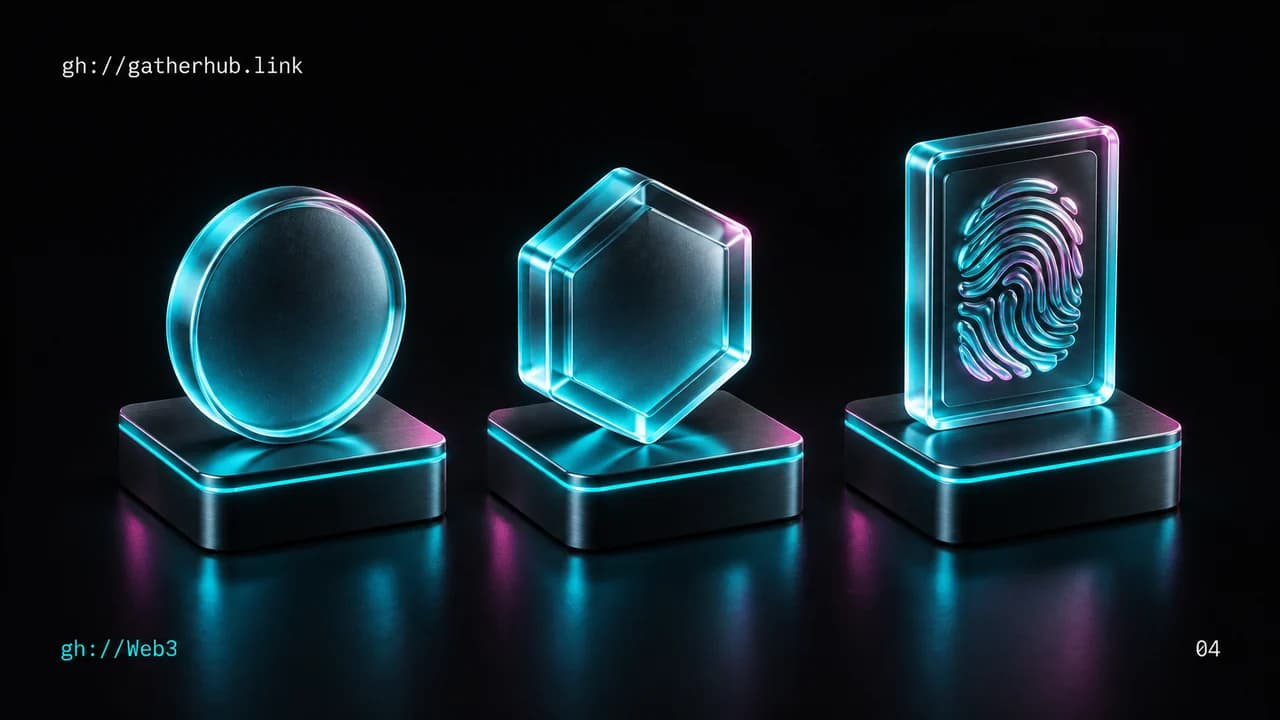
Your wallet displays ETH, a payment token and an NFT. They appear in the same interface but play different roles. The word token describes a unit tracked by a system; it does not tell you its purpose or the holder’s rights.
After following a transaction, we can name the things being transferred.
Native cryptocurrency has a role in its network
Ether, abbreviated ETH, is Ethereum’s native asset. Its uses include paying network fees and participating in the network’s security mechanism. Bitcoin has its own role within Bitcoin. Different blockchains do not all work alike.
In everyday speech, “crypto” can also mean application-issued tokens. Ask whether someone means the network’s native asset or an asset managed by a program. Ethereum explains the role of ether.
Fungible tokens have interchangeable units
Think of points in one loyalty scheme: one point replaces another point in that scheme. That is fungibility. Units of the same token follow the same rules, even though their market value may change.
On Ethereum, ERC-20 defines a common interface for functions including balances and transfers. It helps software work together; it does not certify an issuer or guarantee a price. The ERC-20 standard specifies these technical functions.
Names and symbols can be copied. “EURO”, for example, is not enough to identify a token. The network and contract address distinguish different issuances with similar names.
An NFT is individually identified
An NFT, or non-fungible token, has a distinct identity within a collection. Think of numbered tickets for different seats: they can use the same format without being equivalent.
ERC-721 supports tracking individual units. On a given network, a contract address and token identifier specify which NFT is involved. The ERC-721 specification covers this identification and transfers.
An NFT may point to an image, document or description hosted elsewhere. Keeping the token on a blockchain does not mean the associated file is stored there or will remain available forever.
The technical object does not define every right
Consider a fictional museum issuing an NFT associated with an illustration. Does holding it let you print and sell posters of the illustration? You need to read the licence. Transferring a token does not automatically transfer copyright. The US Copyright Office study on NFTs examines this distinction.
Apply the same reasoning to a token promising access, voting or income. Who grants that right? For how long? Can it change? Which rules apply outside the blockchain?
Check your understanding
Two tokens have the same symbol and logo. Must they be the same asset? No. Identify the network, contract and, for an NFT, the individual unit.
Remember: a native asset, a fungible token and an NFT use different mechanisms. Technical scarcity guarantees neither usefulness, additional rights nor resale value.