Web3 & Blockchain Architecture
Public ledgers, cryptographic keys, smart contracts and tokens: understand the mechanics of direct ownership.
Distinguish a centralised server from a decentralised ledger and understand what you truly hold.
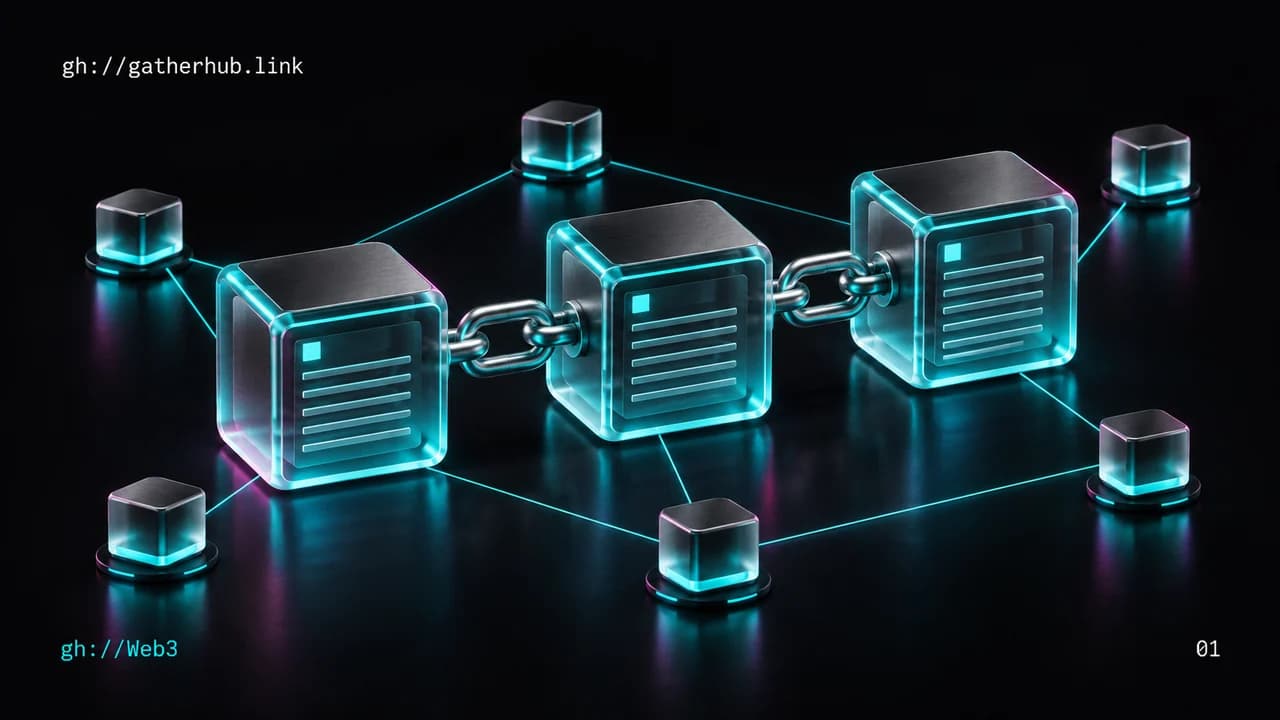
01. UNDERSTAND WEB3 · 02. DECODE RWA · 03. MASTER YOUR HOT WALLET (RABBY)
OPEN ACCESS · NO ACCOUNTVISUAL & CRITICAL HANDBOOK
GatherHub explains in plain language how blockchains transform digital ownership (Web3), how physical and financial assets connect to them (RWA), and how to safely operate a modern hot wallet step by step with Rabby Wallet.
Public ledgers, cryptographic keys, smart contracts and tokens: understand the mechanics of direct ownership.
Distinguish a centralised server from a decentralised ledger and understand what you truly hold.
Real estate, sovereign bonds, gold, private credit: how a physical or financial asset becomes a programmable token.
Analyse the 4 layers of an RWA: the underlying asset, the legal wrapper (SPV), the audit, and the smart contract.
Install Rabby Wallet, back up your Seed Phrase offline, read a transaction simulation and revoke token approvals.
Use a hot wallet independently and safely without ever signing a blind transaction.
In Web2, your identity, assets, and access live inside private databases owned by intermediaries. Web3 replaces the central server with a shared public ledger (the blockchain) and replaces usernames and passwords with a cryptographic key pair that only you control.
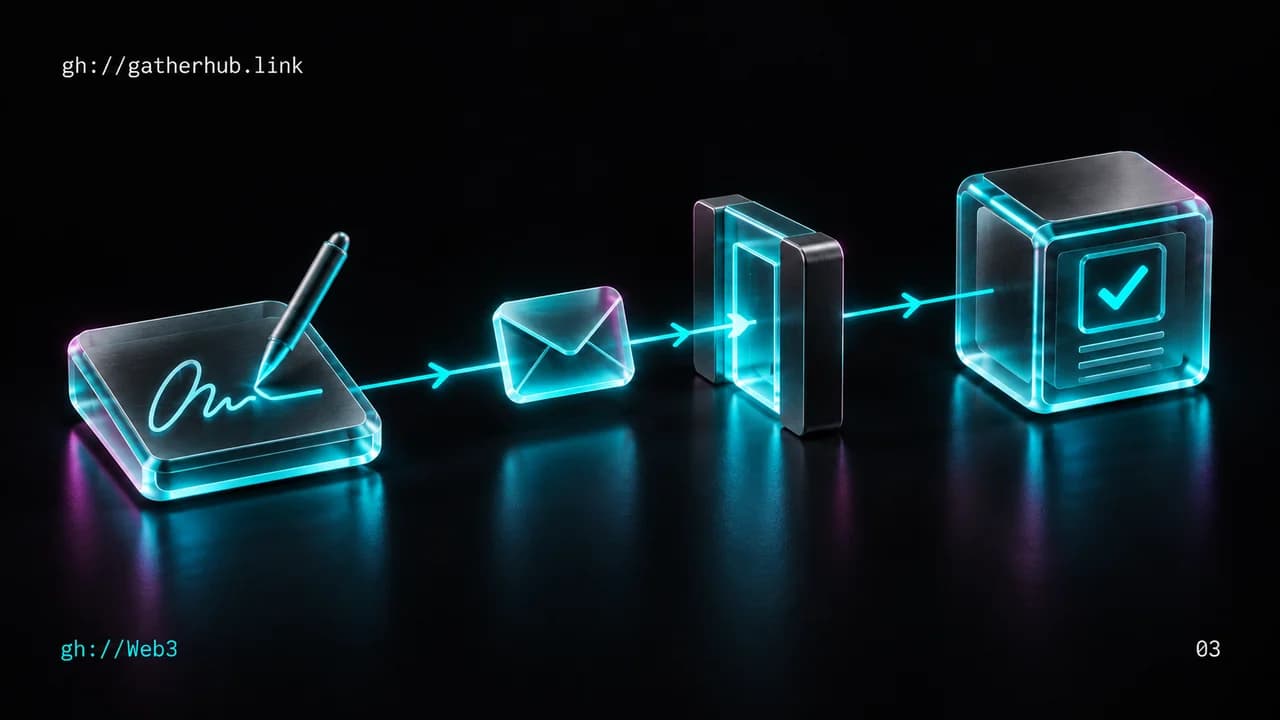
Web3 is not a speculative buzzword: it is a shift in network topology. Instead of asking a server for permission to move value, you sign a mathematical instruction verified by the entire network.
Explore the full Web3 dossier →Servers publish static documents. You read information, with no persistent identity or native way to transfer value.
You publish content and use apps, but your accounts and balances sit inside closed corporate databases that control access.
The ledger (blockchain) is public and shared. Your cryptographic key (wallet) lets you hold assets directly and connect to any app without creating accounts.
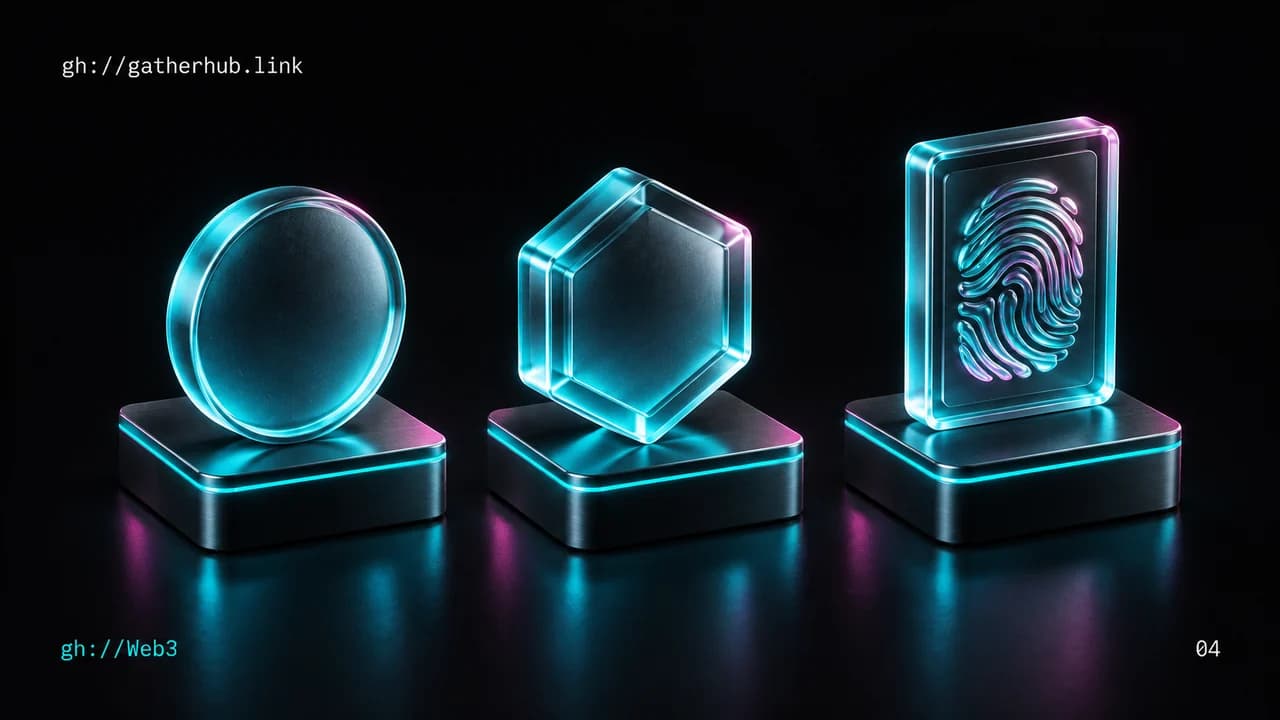
Public ledger replicated across thousands of independent nodes.
Anyone can inspect an address balance and the entire transaction history back to the genesis block.Software programs deployed directly onto the blockchain.
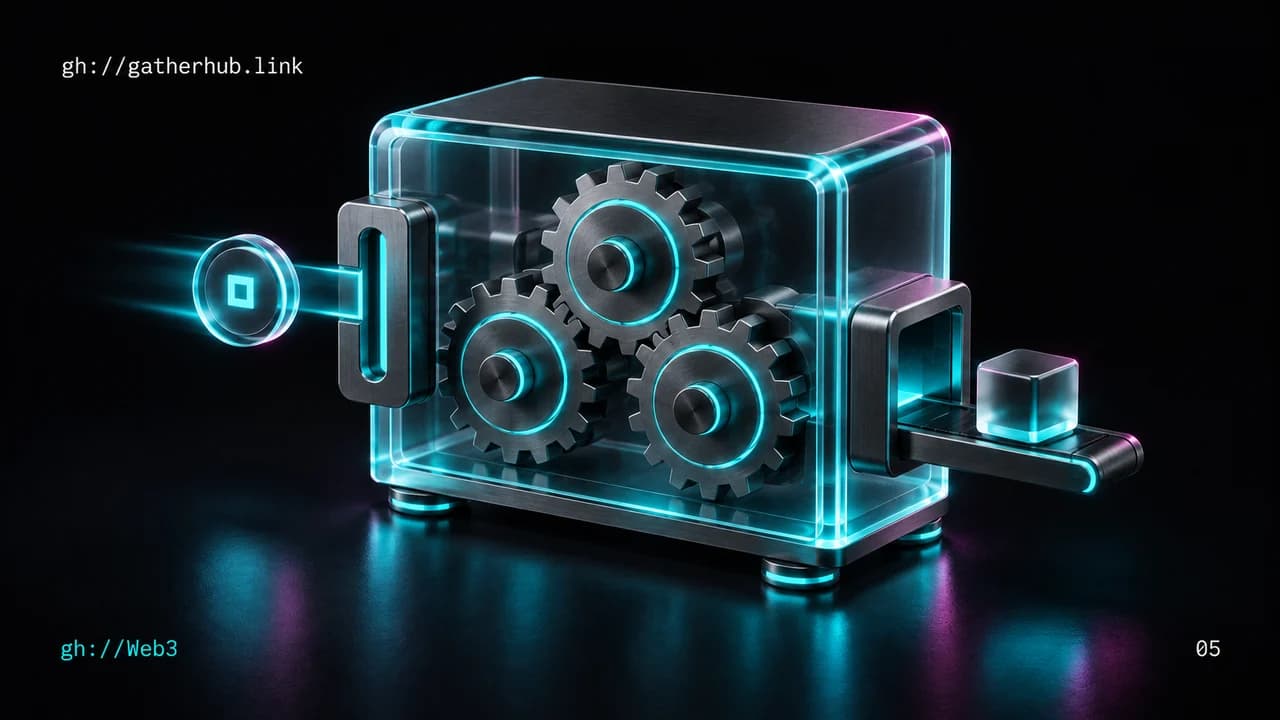
Verified source code is publicly readable: the rules cannot be silently changed mid-game.Digital representation of value, currency, or rights on the ledger.
Total supply, issuance, and holder distribution are auditable down to the second.Your personal cryptographic keychain to read state and sign instructions.
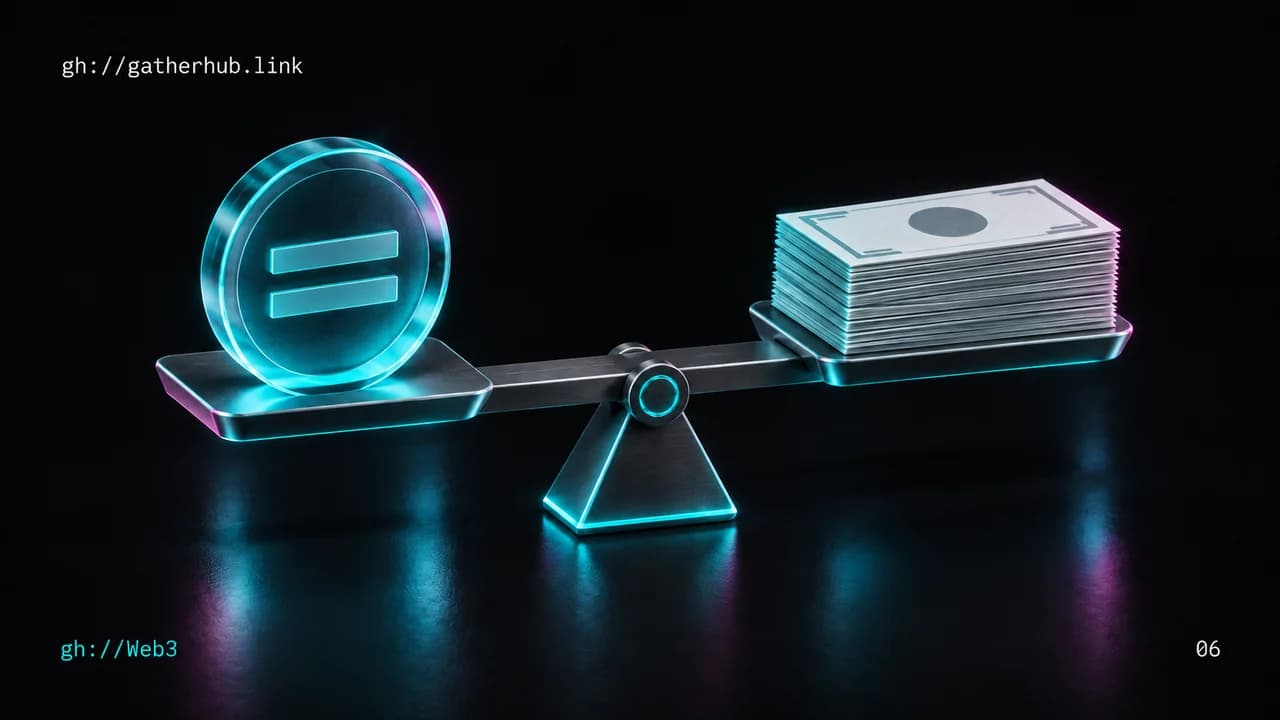
No bank or software vendor can sign a transaction on your behalf as long as you guard your recovery phrase.An RWA (Real-World Asset) is a tangible or traditional financial asset whose economic or ownership rights are represented by a token on a blockchain. The token is not the building or the gold bar itself: it is the programmable digital title legally bound to that asset.
In RWA, the blockchain does not replace the law: it upgrades the holder registry, automates yield distribution, and enables 24/7 settlement without paper back-office delays.
Explore the full RWA dossier →An income-producing building, US/EU Treasury bills paying interest, or allocated gold bars in a vault.
A dedicated Special Purpose Vehicle (SPV) holds the asset and issues shares or bonds whose official registry is mirrored on-chain.
Auditors publish attestations and oracles (e.g., Chainlink Proof of Reserve) feed Net Asset Value (NAV) and reserve data to the smart contract.
RWA tokens often embed a compliance whitelist (e.g., ERC-3643): only `0x` addresses that passed KYC verification can hold or receive the security token.
A 'hot wallet' is an internet-connected wallet (browser extension or mobile app) used for daily interactions with Web3 applications and RWA platforms. In this practical guide, we use Rabby Wallet: the leading open-source wallet for Ethereum and EVM networks, built to simulate every transaction in plain language before you sign.
Hot wallet security comes down to two habits: keeping your 12-word Seed Phrase strictly offline on paper, and always reading Rabby’s pre-signature Balance Change preview before clicking Sign.
Open dedicated Hot Wallet page →STEP-BY-STEP INTERACTIVE TUTORIAL · RABBY WALLET
Select each step to inspect the corresponding Rabby screen and its golden security rule.
Download the official extension from rabby.io (published by DeBank) and pin it to your browser toolbar.
Golden Rule #1: Always verify the exact `rabby.io` domain and official store publisher before installing any wallet extension.
PRE-SIGNATURE INSPECTION LAB
Rabby Wallet’s superpower is translating smart contract code into net balance changes before you sign. Test these 3 real-world cases:
SECURITY SELF-CHECK