PILLAR 01 · INFRASTRUCTURE & LEDGERN° 01

Web3: The Architecture of Direct Ownership

Moving from a web of rented platform accounts to a web of verifiable states held by cryptographic keys.

In Web2, your identity, assets, and access live inside private databases owned by intermediaries. Web3 replaces the central server with a shared public ledger (the blockchain) and replaces usernames and passwords with a cryptographic key pair that only you control.

Web 1 → 3Read · Write · Own

From static documents (1995) to social platforms (2005), and now to direct ownership of assets and rights via private keys.

24/7/365Always-on ledger

A blockchain runs continuously: every block locks in transaction history without unilateral rewriting.

0x...Universal account

A single cryptographic address unlocks hundreds of applications without creating accounts or handing over an email.

ARCHITECTURAL CROSS-SECTION

The 4 Foundational Building Blocks of Web3

Every Web3 interaction relies on four technical layers working together without a central authority.

01B1 · LEDGER

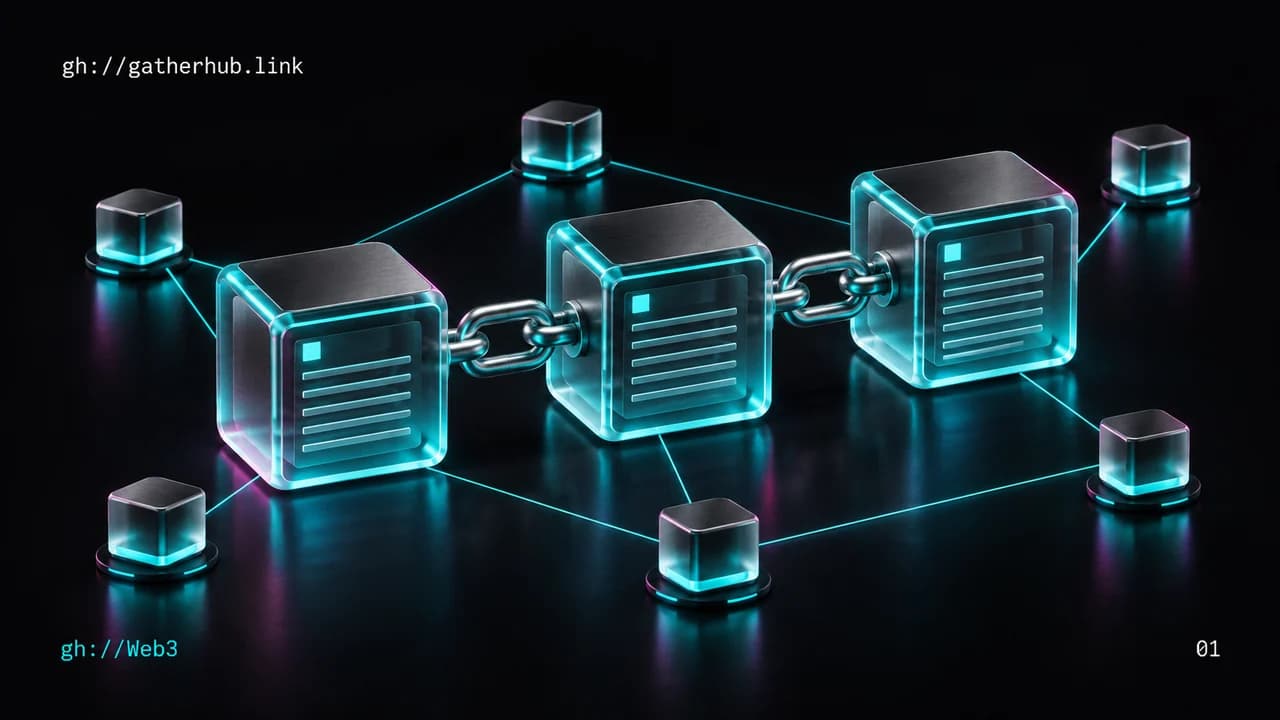
The Blockchain (Shared State)

Public ledger replicated across thousands of independent nodes.

MECHANISM

Each block bundles validated transactions and links to the previous block via a cryptographic fingerprint (hash).

PROOF & VERIFICATION

Anyone can inspect an address balance and the entire transaction history back to the genesis block.
02B2 · LOGIC

Smart Contracts (Self-Executing Code)

Software programs deployed directly onto the blockchain.

MECHANISM

As soon as coded conditions are met, execution is automatic, deterministic, and public (`if A sends X, transfer Y`).

PROOF & VERIFICATION

Verified source code is publicly readable: the rules cannot be silently changed mid-game.

03B3 · UNITS

Native Assets, Tokens & Stablecoins

Digital representation of value, currency, or rights on the ledger.

MECHANISM

The native asset (e.g., ETH) pays for network computation (gas). Tokens (ERC-20, ERC-3643) follow programmable standards.

PROOF & VERIFICATION

Total supply, issuance, and holder distribution are auditable down to the second.

04B4 · ACCESS

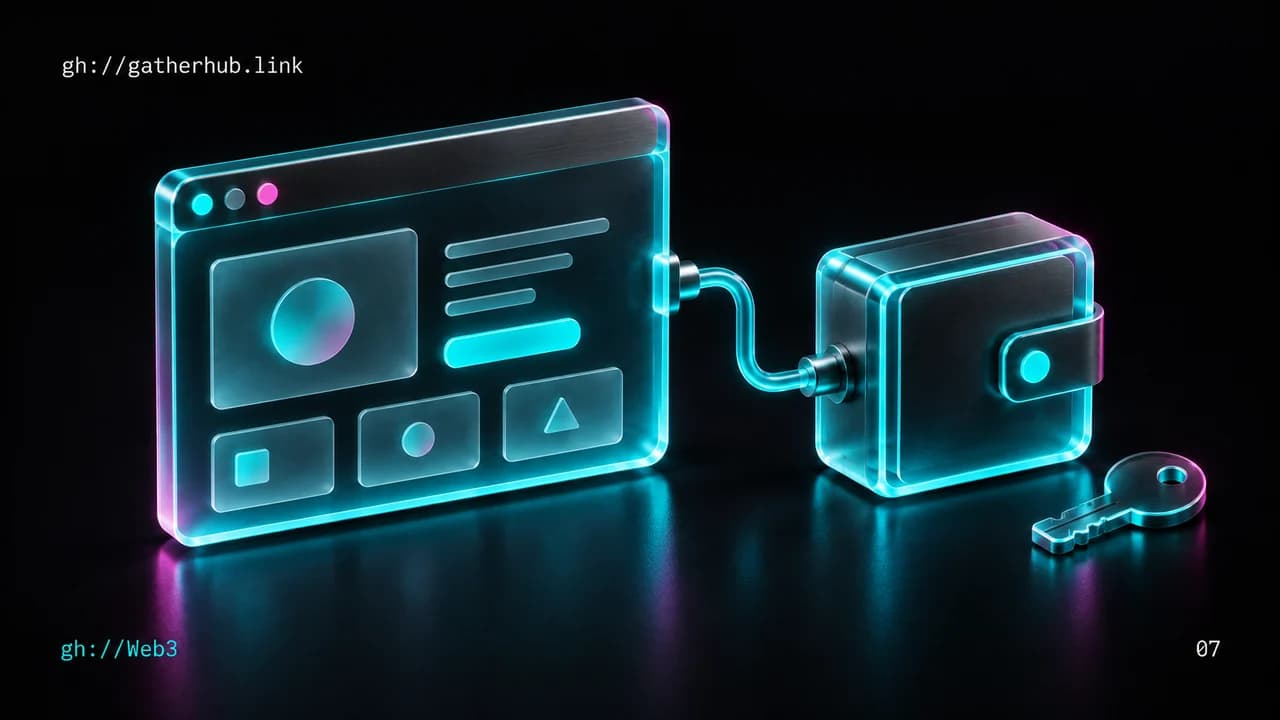
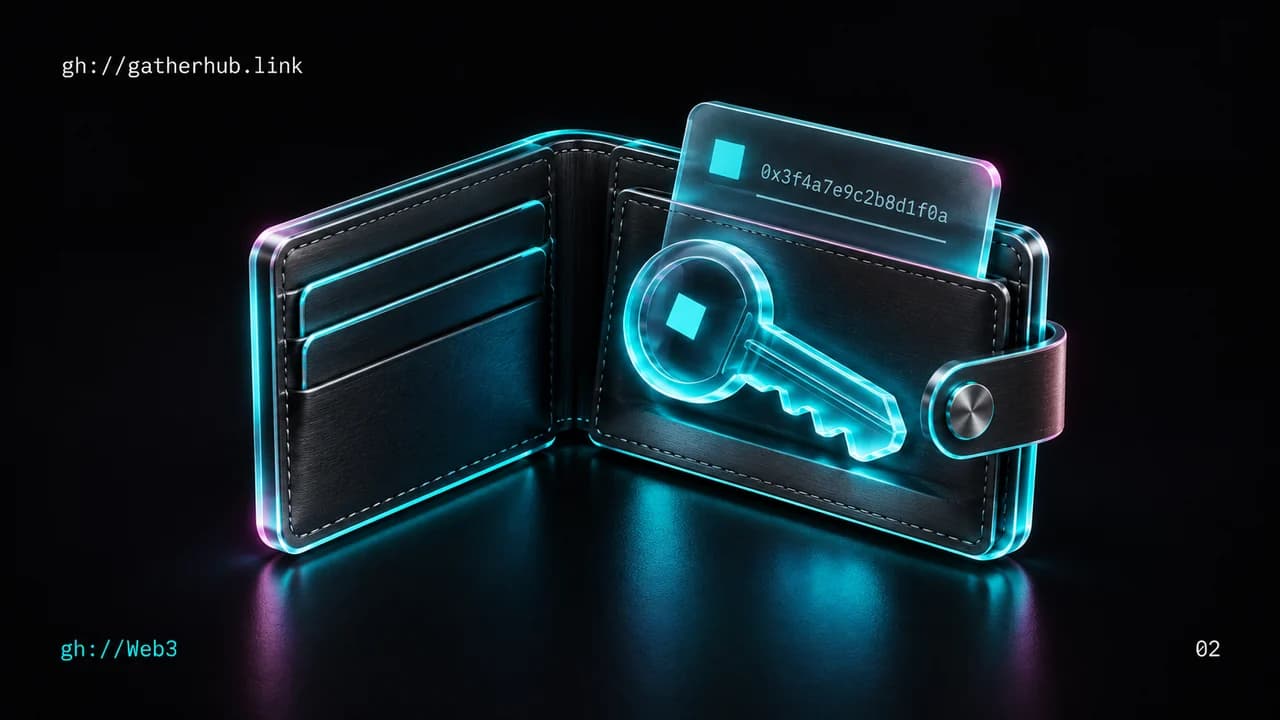
The Wallet (Public & Private Key Pair)

Your personal cryptographic keychain to read state and sign instructions.

MECHANISM

Your public address (`0x...`) receives assets; your private key produces an unforgeable signature without ever revealing itself.

PROOF & VERIFICATION

No bank or software vendor can sign a transaction on your behalf as long as you guard your recovery phrase.

COMPARISON MATRIX

Structural Comparison: Web1, Web2, and Web3

DimensionWeb 1.0 (1991–2004)Web 2.0 (2004–Today)Web 3.0 (Open Architecture)
Core VerbRead (Static pages)Read + Write (Social & Cloud)Read + Write + Own (Ledgers)
Identity & AccessNone or local sessionEmail + password / OAuth (Google, Apple)Cryptographic key pair (Wallet)
Where Data LivesPublisher’s web serverClosed corporate databasesDecentralised, publicly verifiable state
Value TransferExternal (cheques, card gateways)Closed banking rails & intermediary feesProtocol-native (peer-to-peer via smart contracts)
PortabilityLow (hyperlinks)Locked in (cannot export your social/asset graph)Complete (your wallet carries assets across any dApp)

CRITICAL PERSPECTIVE

Technical Clarity: What Web3 Guarantees — and Its Real Limits

What the Architecture Guarantees

  • History immutability: a confirmed transaction on the network cannot be arbitrarily erased.
  • Neutral execution: a smart contract applies the exact same rule to every wallet.
  • Self-custody sovereignty: as long as you protect your private key, no third party can confiscate your key.

What Requires Your Vigilance

  • Irreversibility: there is no 'Forgot password' button or helpdesk to reverse a malicious signature.
  • Code quality: 'automatic' does not mean 'bug-free' — a poorly audited smart contract can contain vulnerabilities.
  • Network fees (Gas): every state change on-chain requires computation paid in a fraction of the native token.

FREQUENT QUESTIONS

Plain-Language Answers

Are my crypto and tokens stored 'inside' my phone or computer?

No. Your assets always live on the public blockchain ledger. Your wallet (such as Rabby) only holds the cryptographic keys proving that those ledger entries belong to you.

Why do I have to pay 'gas' for transactions?

Gas compensates validators who execute the computation and record your transaction on the global ledger, while preventing infinite network spam.

What is the difference between a Layer 1 (Ethereum) and a Layer 2 (Arbitrum, Base)?

Layer 1 is the ultimate security settlement layer. Layer 2 networks bundle thousands of transactions at a fraction of a cent before anchoring their cryptographic proof onto Ethereum.

IN-DEPTH GUIDES

Explore Each Mechanism Step by Step

19 dossiers