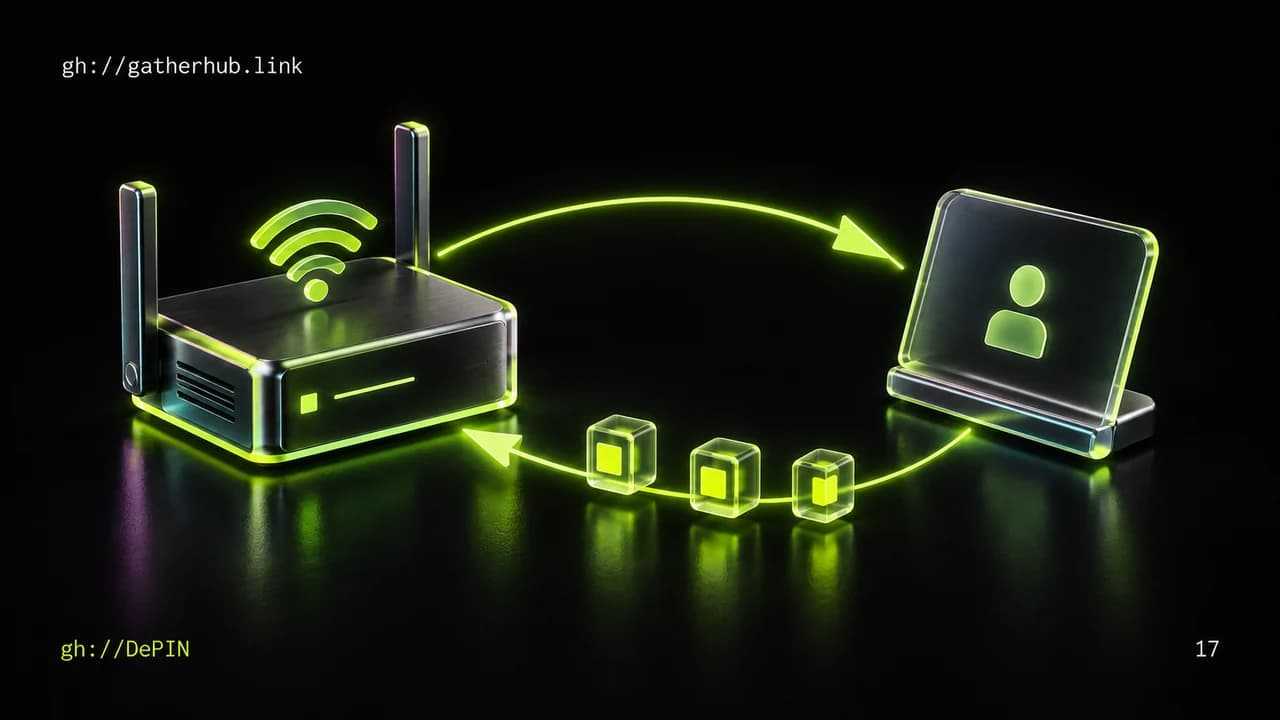
Why provide resources before a network has many customers? Rewards can help fund the early stage. A token may compensate a contribution or encourage deployment, but distribution does not prove the service is profitable.
The DePIN operation guide followed contributions through verification. Now examine where compensation comes from and what it means.
Separate payment from launch support
A customer payment purchases a service. Newly issued tokens or distributions from a reserve can support contributors without coming from a service sale at that moment.
These sources can coexist. Hivemapper’s reward documentation distinguishes reward categories and mechanisms. The key lesson is not to label every distribution “revenue”.
Launch support may be useful. But what replaces it when the allocation shrinks or more participants share it?
Understand the token’s role
Depending on the network, tokens may support rewards, governance, commitments or service access. Customers do not necessarily pay directly with the speculative asset traded on exchanges.
Helium’s HNT documentation explains its relationship with Data Credits. Follow the whole chain: who purchases the service, in which unit, and how does this activity connect with provider compensation?
Project rules evolve. An old reward formula is not an established future income stream.
A reward is not profit
Fictional example: an operator receives 50 tokens in a month. If each can actually be sold for €2, that is €100 gross before sale fees and tax. Electricity, connectivity and maintenance cost €60 that month.
That leaves €40 before equipment, time and other costs. If the token can only be sold for €1, the same 50 tokens produce €50, giving a €10 loss before those additional costs.
Suppose the equipment also cost €300. Claiming it will pay for itself within a few months assumes stable compensation, sale prices and costs. Dividing the upfront cost by observed income does not establish that stability.
More participants can change the allocation
Imagine a fixed pool of 1,000 tokens shared by equally weighted contributions. With 100 contributions, each receives 10 tokens; with 200, each receives 5. The network can grow while individual rewards fall.
Real contributions may have different weights and the pool may change. This example identifies the parameters to inspect: demand, quality, participant count, issuance rules and conversion price.
A rising token price can conceal low usage; more tokens received can conceal a lower monetary value. Examine these separately.
Check your understanding
You receive twice as many tokens, but their sale price falls to one third. Does gross income rise? No. With comparable starting conditions, it becomes two thirds of previous income before fees.
Remember: keep three accounts separate: services sold, tokens distributed and the participant’s result after costs.
Final step: recognising a useful DePIN project.